
Becoming a community capable of learning, adapting, and taking action.
By Laura Rossi and Eleonora Ventura, coaches at Hermes Consulting
A strategic choice: investing in culture
Aeroporto di Bologna has chosen to invest in an essential lever for its future: people’s ability to read the context, adapt, and act with initiative in a complex, dynamic, and high-responsibility system.
From this vision comes Let’s Develop, an experiential programme designed to build Learning Agility and strengthen cross-functional collaboration between managers and young professionals.
The strength of an organisation that keeps learning
In an intricate, high-responsibility environment like an airport, the ability to operate as a system is a decisive asset.
Efficiency, specialisation, and role clarity remain essential; at the same time, they become even more powerful when combined with cross-functional collaboration, openness to change, and an awareness of each person’s contribution.
This is precisely where the programme fits in: creating shared experiences that strengthen how people get to know one another, dialogue, and build mutual accountability.
Because an organisational culture truly evolves when people realise they are part of the same system and turn this awareness into practical, everyday behaviours focused on the future.
Learning Agility: learning by doing
To turn development into a genuine experience, Let’s Develop chose to start from action. Learning Agility offered a simple yet powerful framework for developing the ability to learn from experience, read new situations, collaborate with diverse individuals, and turn awareness and initiative into tangible behaviours.
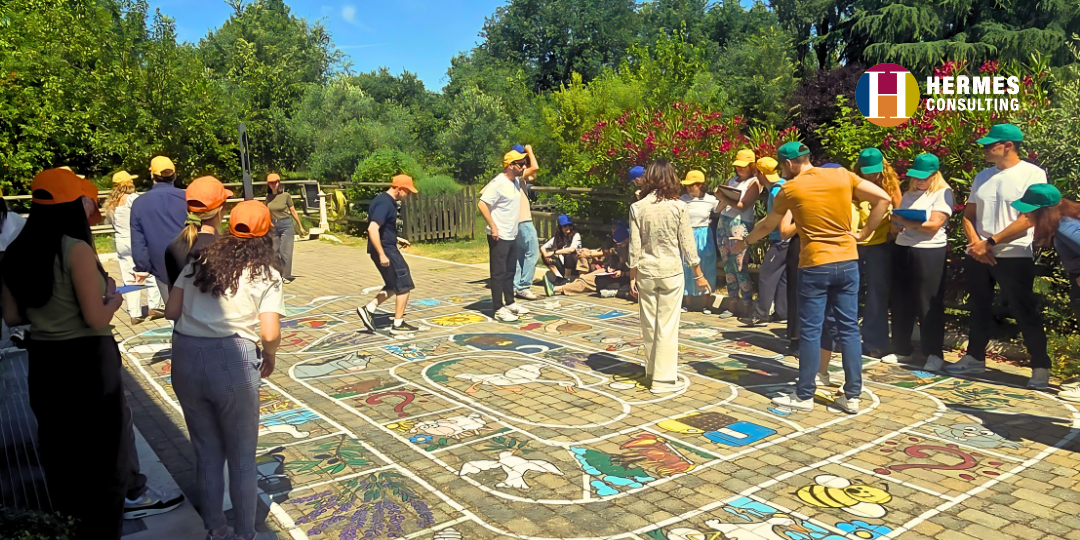
The five dimensions of the model (People Agility, Mental Agility, Change Agility, Results Agility, and Self-Awareness) were experienced through a treasure hunt designed to engage mind, relationships, action, and self-awareness.
Each challenge allowed participants to experiment, observe, and recognise different ways of learning, contributing, and collaborating, making the model immediately relevant to daily work.
What was developed
The programme translated the five dimensions of Learning Agility into five practical challenges: short, intensive, and observable opportunities to develop how people connect, navigate complexity, address change, build awareness, and channel action toward shared results.
People Agility
With the Relational Bingo, participants moved past roles and preconceptions, sparking curiosity, active listening, and new connections.
Change Agility
In the Game of the Goose, the group experienced how to stay clear-headed, collaborative, and adaptable when the ground rules shift.
Mental Agility
With 30 Ways of Looking, a single prompt became a testing ground to move beyond the obvious, generate hypotheses, and explore alternative perspectives.
Self-Awareness
Through Roots, Branches, Fruits, the group brought strengths, areas for growth, and generative opportunities for the future to light.
Results Agility
The Values Jenga tested the ability to negotiate priorities, build common ground, and connect collaboration with results.
From group work to a shared agreement
At the end of the first session, managers and young team members worked together to shape the conditions that enable a group to recognise itself as a team and work with greater trust, clarity, and shared responsibility.
This discussion led to a shared treasure chest: not merely a collection of words, but the result of an authentic dialogue on what truly helps people collaborate better, feel part of the same journey, and contribute purposefully to the organisation’s future.
Beyond the principles that emerged, the greatest value lies in how they were chosen: through listening, open dialogue, and translation into concrete behaviours.
Through this step, the group shaped a shared commitment: a simple, practical agreement created by the people themselves, which strengthens the quality of relationships and fosters a way of working that is increasingly collaborative, accountable, and forward-looking.
The second phase: from awareness to intentional action
Three weeks later, the programme continued with the young professionals, opening up a dedicated space focused on a crucial topic for the organisation’s future: the ability to act with initiative, accountability, and awareness of one’s impact.
The session started from a simple, practical question: where can I make a difference?
Distinguishing between what is directly within our control, what lies outside our influence, and what we can actively shape helped the group direct energy, ideas, and contributions toward more intentional, valuable, and generative actions for their workplace.
What participants chose to commit to
The session concluded with practical individual commitments, designed to be shared with their managers and put into practice right away in their daily work.
Four meaningful directions emerged, reflecting the young professionals’ desire to contribute more purposefully to their organisation’s growth:
- Open up to dialogue: communicate more directly, ask for feedback, and make what matters for working better together more visible.
- Contribute actively: suggest ideas, take greater initiative, and play an active role in decisions and potential improvements.
- Generate positive energy: foster enthusiasm, collaboration, and high-quality relationships, contributing to a more engaging work environment.
- Experiment with courage: speak up, take responsible risks, and turn the fear of judgement into an opportunity to learn.
A journey that continues
The programme will continue with new stages that will once again involve managers, reaffirming Aeroporto di Bologna‘s commitment to making people development a shared, ongoing process connected to the real life of the organisation.
Learning Agility becomes a practical lever when it bridges roles, generations, and organisational levels, helping build a common language and new ways to assess situations, take initiative, provide feedback, collaborate, and take ownership.
A significant first step has already been taken: thirty people deepened their mutual understanding, clarified the conditions needed to work as a team, and built a shared agreement on the behaviours they want to recognise and practice every day.
In the second session, the young professionals turned insights, expectations, and their drive to contribute into practical proposals to bring into dialogue with their managers.
Key takeaways from this first stage
Three core insights emerged from this initial stage of the programme, reflecting the value of the experience and pointing toward a clear direction for continuing to grow as a professional community.
Diversity creates value when it brings people together
Encouraging dialogue across roles, functions, and generations broadens perspectives, recognises diverse skills, and builds a richer, shared approach to handling challenges.
When values such as trust, responsibility, collaboration, and a sense of belonging are discussed and translated into concrete actions, they become living benchmarks: guiding relationships, decisions, and how people work together.
Proactivity grows when people feel empowered to contribute
Taking initiative comes more naturally when individuals recognise their sphere of influence, feel empowered to voice ideas, and turn their desire to contribute into valuable actions for themselves, their team, and the organisation.
This is where the true value of the programme lies: in the ability to bring these insights directly into day-to-day work—into meetings, feedback sessions, handovers, and daily choices that shape the organisation’s real culture.
Continuing to invest in these capabilities means strengthening a professional community capable of knowing each other better, collaborating with trust, reading change, and contributing responsibly to a shared future.