
INTRODUCTION
There is a question that concerns anyone with responsibility for other people: what kind of environment do I create, every day, for those who work with me?
It concerns the way you listen, correct, extend trust, interpret a mistake, support a struggle, recognise potential; it concerns the atmosphere you create when entering a meeting, the way you react when someone makes a mistake, the quality of attention you offer when a person is struggling or failing to meet expectations.
Donald Winnicott, paediatrician and psychoanalyst, spoke of a “good enough environment” to show how personal growth and transformation depend not only on individual strength, but also on the quality of the surrounding context.
A good enough environment is not perfect. It is an environment that holds without suffocating, supports without taking over, empowers without humiliating, and continues to see the person beyond their fall.
His thinking offers a valuable lens through which to reflect on what we experienced while guiding a group of senior executives through San Patrignano: no one truly changes alone.
You might wonder: why take managers to San Patrignano?
Not for an alternative team-building session, nor simply to seek a powerful story to tell.
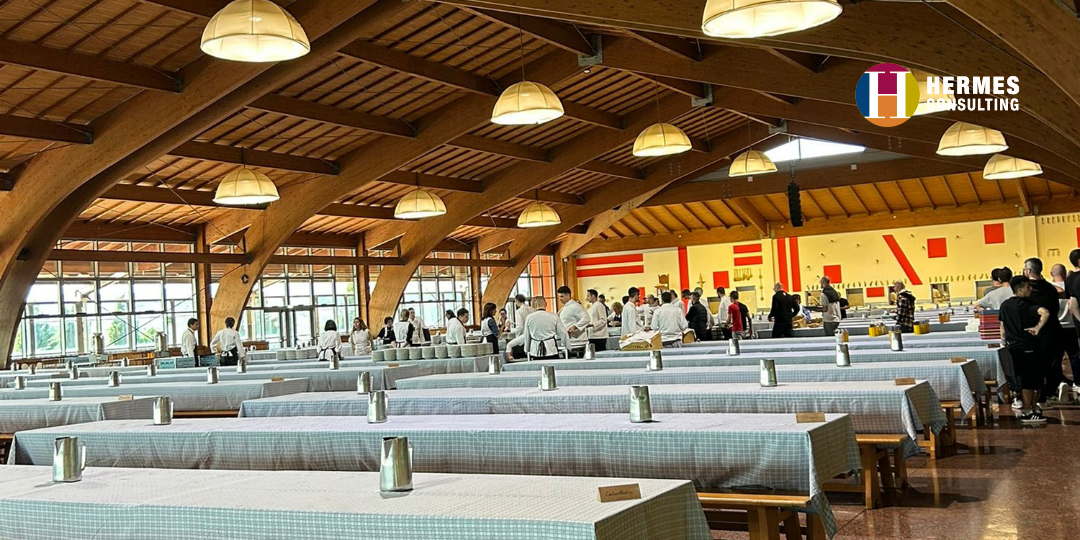
San Patrignano is a community that welcomes people who have lived through addiction, vulnerability and a loss of direction, and who are trying, step by step, to rebuild a new possibility for their lives. Entering such a context means encountering, in an intense and concrete way, fundamental questions that run through every human and organisational system.
What enables a person to get moving again?
What makes a context capable of supporting genuine transformation?
How can trust, accountability, relationships and boundaries become conditions for growth, rather than remaining mere statements of principle?
If you lead people, these questions concern you directly. Because every day, even without naming it, you help shape a context: more open or more defensive, more generative or more controlling, more capable of fostering growth or more inclined to reinforce labels.
Our goal was precisely this: to design a learning experience that challenges leadership starting from the quality of the environments we create for others.
Before the experience: preparing the posture
Even before entering the community, we worked on a crucial aspect: the internal posture with which to approach the experience.
When stepping into such an intense context, the risk is arriving already armed with explanations, categories, judgments or expectations. You can observe, comment, interpret. But you can also choose to let yourself be challenged.
For this reason, we did not prepare participants to “understand” San Patrignano in advance. We guided them to enter with greater presence.
The first phase was dedicated to the quality of presence.
Through individual reflection, peer discussions, plenary sessions and evocative cards, each participant worked on a few simple, precise questions:
With what quality do I want to be present?
What part of myself do I need to suspend to truly meet what I will encounter?
Which part of myself do I bring, as a person even before being a manager?
This shifted the focus from “what will I see” to “how will I be present while seeing it”. It is an essential difference, because in managerial life we are often trained to assess quickly, categorise, decide and resolve. Here, what was needed first was to slow down.
Methods and tools: how we worked in practice
We began with individual activities to bring to light the mindset with which each participant entered the programme. We then worked in pairs to focus on how each of us encounters vulnerability, difference, fragility and the other person’s potential for renewal.
We used value cards to help each manager choose a personal posture to bring into the experience: listening, respect, openness, trust, presence, suspension of judgment. This was not about picking an inspiring word, but about making a conscious commitment to how to show up in the encounter.
Dinner also became part of the process.
We gave the group a simple task: observe how the quality of presence developed earlier was expressed in informal conversations, in mutual listening, in how they engaged together. At that point, the experience moved beyond the classroom and became a concrete relational practice.
In the evening session, we slowed down further. We introduced silence, guided listening and symbolic cards to help participants recognise how they felt on the threshold of the next day’s experience.
From there, we opened up a key question: what makes a context capable not only of containing, but of transforming?
During the visit, we chose a minimal framework. We asked participants to observe a single scene, word, dynamic or detail that challenged the context or themselves. We did not want to overburden the experience with overly analytical grids or frameworks. We wanted to leave room for genuine encounter.
After the experience: giving shape to what surfaced
In the debrief, we started from something very concrete: a face, a phrase, a gesture, a scene that stayed with them.
After an intense experience, the temptation is often to summarise it immediately: “it was powerful”, “it was emotional”, “it really struck me”. But these phrases, while true, risk closing down too quickly what the experience opened up.
This is why we asked participants to return to a specific detail.
From there, we guided them to ask themselves:
What truly reached me?
What did I recognise about myself through that encounter?
What distance, defence or relational habit does this experience invite me to look at?
We then worked in smaller groups, following a rule that is simple yet demanding: listen without commenting, interpreting or giving advice. Each group shared a summary phrase in the plenary session, bringing out shared themes and images. Only at the end did we build the bridge back to the managerial role, through a central question:
What is this experience asking me to bridge in the way I meet others?
For some, it was an emotional distance; for others, rigidity. For others still, the rush to interpret, correct, judge or take shelter behind their role.
What matters for those who lead people
If you lead a team, you probably know this tension well: you must decide while listening, give direction while leaving space, correct without crushing, and foster accountability without leaving the other person feeling alone.
This is where the experience of San Patrignano becomes a managerial question.
Every leader creates an environment. They create it in how they speak, listen, respond to mistakes, extend trust, set boundaries, recognise potential, and interpret difficulty.
An environment can heighten defensiveness, fear and dependence on control. It can push people to protect themselves, please others, hide mistakes, and do the bare minimum. Or it can cultivate trust, accountability, learning and possibility.
Leadership, then, is not only about managing processes and delivering results. It is also about the quality of the human space you make possible for others.
What kind of environment do I create, every day, for the people who work with me?
The value of this experience does not lie in having a ready-made answer. It lies in the question it leaves open.
An environment that reinforces labels, widens distance and fuels defences? Or a good enough environment, capable of containing, empowering and continuing to see potential even where there is fragility?
Transformative leadership can stem from the ability to bridge a distance, suspend judgment, stay present a little longer, and build contexts where people can not only function, but truly get moving again.
To find out more: