
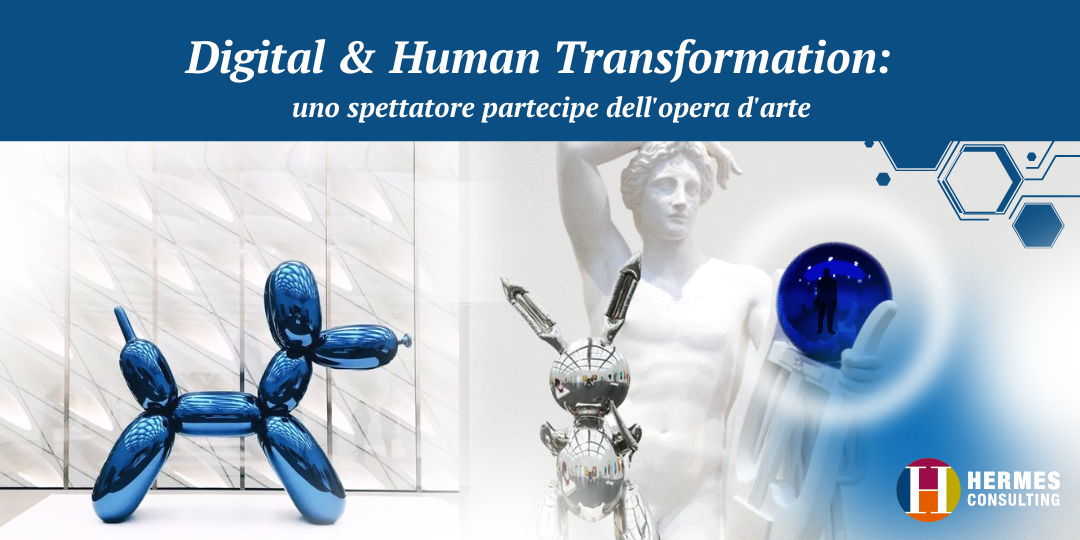
Let it shine
Have you heard of Jeff Koons?
He is a world-renowned contemporary artist. A few months ago, the city of Florence hosted his largest exhibition in Italy within the stunning setting of Palazzo Strozzi, designed to engage all the senses and celebrate brilliance.
The title was “Shine”.
Walking among his works, we are physically drawn towards the light and immediately feel the energy it radiates.
Here, art is imbued with intensity, becoming a medium for deep connection; it is experienced as a sensory and visceral encounter, drawing the viewer deeply into the artistic experience.
The message Jeff Koons conveys is the centrality, the celebration of the individual as an active participant in the artwork and as an integral part of the artistic experience itself.
The core concept is that “Only by elevating ourselves can we open up to the rest of the world, living freely and experiencing everything that surrounds us.”
The common threads throughout his work are: shine, the glow emitted by objects, but at the same time the recognition of ambiguity—the weight of stainless steel evoking the lightness of a balloon, the sparkle of what seems precious, and the simplicity of an ordinary material used on factory floors.
Jeff Koons’ exhibition speaks to how we perceive and understand reality.
Luminous surfaces lift our spirits, spark euphoria and excitement, and create heightened experiences of reality.
Another recurring theme in his work is this:
Every visitor is placed before a mirror in which they see themselves reflected.
They become the centre of the surrounding space; they can truly understand their potential and what they might become. This is the secret hidden within transformation that turns it into genuine evolution.
Each of Jeff Koons’ sculptures affirms the viewer’s presence, their existence, and tells them they are part of a wider dialogue.
Art thrives on its relationship with the viewer. When the viewer leaves the room, the art also ceases to exist.
This is how Koons describes the experience he aims to create. We actively take part in the project. We are an integral part of the artwork, absorbed into the spectacle.
The work takes on different meanings and nuances depending on the person looking into it. It holds multiple levels of interpretation, and each of us can discover different meanings within it.
What is certain is that we feel our engagement in the artistic experience viscerally, as we see our reflection alongside the objects.
Yet at the same time, the reflection is elusive, shifting with changes in light and our own movements.
Amid change, fluidity and ambiguity, however, we are present; we experience an “elevated state”, a euphoric sense of affirmation.
We project ourselves into another time, in the here and now, but simultaneously beyond it. We are there, yet past and present merge to guide our gaze towards the future.
Brilliance and our reflection in change
In today’s landscape, marked by continuous and disruptive change, we have often observed—and continually witness—the ongoing challenges unfolding before us.
A constantly shifting environment, manifesting in its fluidity and its ambiguity: being always present yet distant, a new physical dimension stripped of bodily presence, an immense volume of increasingly intangible data, and a new model of participation in both personal and professional life.
Viewing Koons’ work through a different lens, we might say that amid this fluid landscape—which can confuse, dazzle, and illuminate us with vibrant colours and ever-changing imagery—it becomes clear from all angles that the individual remains at the heart of transformation.
This is why we must take an integrated approach and speak of digital and human transformation as one, treating them as two elements advancing side by side.
A World Economic Forum report, “The Future of Jobs and Skills”, highlights how digitalisation, robotics, artificial intelligence and emerging digital technologies are spreading at incredible speed, driving epochal shifts in the labour market.
This transformation reinforces a “disrupt, innovate and accelerate” mindset and fosters an increasingly digital, collaborative culture.
Yet people remain an organisation’s most vital asset, and it is their reflection in the mirror that moves the system forward.
Digital transformation is a new paradigm that brings radical shifts to organisational dynamics and to how people collaborate, express themselves, and build relationships.
At the core of this paradigm, however, the human factor remains paramount. Technology, new tools, and new models will never be the ultimate goals, but rather effective means to achieve them.
We have a major opportunity before us to reflect on who we are, where we want to go, and who we want to become.
Our ability to embrace change, experience it actively, appreciate its beauty and potential, and rise to its challenges is the first step towards the evolution of any organisational system.
“I think that when you leave the room, the art leaves the room too. Art is about your possibilities as a human being. It’s about your excitement, your potential, and what you can become. It affirms your existence.”
Jeff Koons