
The context in which diversity and inclusion are essential
We live and do business in a contemporary world that presents unprecedented characteristics and brings challenges never faced before.
We are in what is defined as the knowledge era: it is the first time that access to information is simultaneous, pervasive, and democratic; it is the first time that “the customer” has become global and the boundaries that once defined markets and competition have become fluid and indefinable; it is the first time that we find ourselves with up to five different generations within our organisations.
We have moved from one-way mechanisms to circular relationships: communication is no longer asynchronous transmission (broadcasting), but dynamic interaction (social media); exclusive use has turned into sharing; products are increasingly becoming services.
The world thrives on feedback and interactions.
Just as in the past, we need to innovate constantly to compete while operating with scarce resources; however, today we are called upon to do so at ever-increasing speed, on a global scale, maximising the use of an intangible resource (knowledge) distributed across a multitude of knowledge workers.
The paradigm
In this context, the organisational models of the past are showing their limitations.
Even the more recent organic model, which compares the company to a living organism, ensures adaptability, but not long-term sustainability.
Today, we talk less and less about linear development and more and more about circular growth, where a sustainable business is one capable of generating value for the organisation, its stakeholders, and the broader system in which it operates.
Within a framework of sustainability, we need our organisational models to evolve so that they possess resilience, richness, and flexible stability: the qualities of a natural ecosystem.
The evolutionary drivers
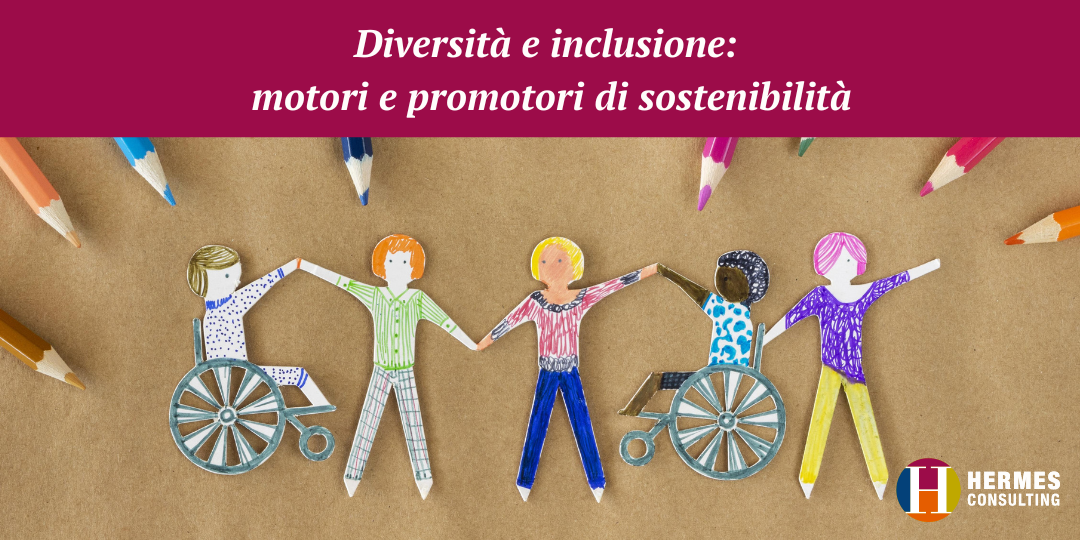
Diversity and inclusion are two foundational elements of survival strategies within natural ecosystems.
They are characteristics that enable organic elements to live and thrive over time and in any context.
Diversity of knowledge, thought, and mindsets—with the label “gender diversity” being merely an initial summary—makes it possible to shape solutions that are not only adaptive, but anticipatory, and to address complexity effectively.
Inclusion is the process through which we harmonise these diversities and transform them into catalysts for sustainable growth.
To encourage the embedding of these drivers into our organisational cultures, we need to take four fundamental steps, drawn from the rules of natural ecosystems.
- Move beyond the standard archetype to embrace universality (enabling us to enrich ourselves through difference and contribute towards a shared outcome)
- Harness complementarity (where the strengths of some mutually compensate for the weaknesses of others)
- Activate every cell of the system (to develop distributed leadership and specialised decision-making)
- Interconnect and cooperate (to generate and implement solutions, both adaptive and anticipatory, capable of ensuring longevity)
New regulations and initiatives encouraging us to build people policies focused on valuing difference through an inclusive approach therefore represent an important opportunity to drive the evolution of our organisations towards ecosystemic forms that are resilient, productive, and sustainable over time.