
INTRODUCTION
As part of an in-depth reflection on technological innovation and its ethical and environmental implications, Giulia Terracciano, Head of Communications at Hermes Consulting, had the opportunity to explore these themes in an insightful interview with Vincenzo Di Martino, Consultant & Coach at Hermes Consulting and an expert in the field.
The interview addressed key themes:
- The environmental impact of AI, often underestimated in political debate;
- The growing desire for a return to human values;
- The rising generations’ need for a balance between innovation and sustainability.
A moment of insight into how we can steer technological innovation towards a more “felix” future.
Giulia: Vincenzo, in your view, what are the main aspects of artificial intelligence’s impact on society and the environment that public perception tends to underestimate?
Vincenzo: Rather than an underestimation of the environmental problem, I simply believe that this issue is barely taken into consideration, or rather that it is discussed far too little within public and corporate debate.
And yet, studies on the environmental impact of new technologies are clear and well established.
For example, a study published in several scientific journals and deposited with the UN, entitled “Making AI Less Thirsty: Uncovering and Addressing the Secret Water Footprint of AI Models”, highlights the issue of water consumption in the development of AI.
To train models like GPT-3 in modern Microsoft data centres in the US, around 700,000 litres of clean freshwater are consumed, equivalent to the manufacturing of approximately 370 BMW cars or 320 Tesla cars.
This comes at a time when reports by organisations such as Amnesty International show that many people today are becoming refugees due to water scarcity, defining it as a climate migration phenomenon.
Another significant figure relates to energy consumption and CO2 emissions. Training GPT-3 consumed around 1,287 MWh and led to emissions of over 550 tonnes of carbon dioxide, the equivalent of 550 round-trip flights between New York and San Francisco.
With the shift towards GPT-4, which requires more parameters, energy consumption increases even further.
Giulia: What steps should be taken to better align perception with reality?
Vincenzo: We need to raise awareness and provide proper training both for those who develop technology and those who use it. We should foster a culture of conscious awareness around artificial intelligence. Beyond improving tool training, it is crucial to reflect seriously on the environmental impact of these technologies.
People need to be informed and engaged in a conscious dialogue on the subject.
Giulia: In relation to this race to keep up with innovation, we have seen a return to human values. People are questioning their own abilities and their essence, asking: “Where do I fit in? What contribution can I make to the world now that technology can do things in my place?” In your view, why is all this happening?
Vincenzo: There is a rediscovery of what philosophy calls the “fundamental option”: the personal choice about who we are and what we do in this world.
Happiness, understood as the fulfilment of one’s potential, is a concept that dates back to the Romans.
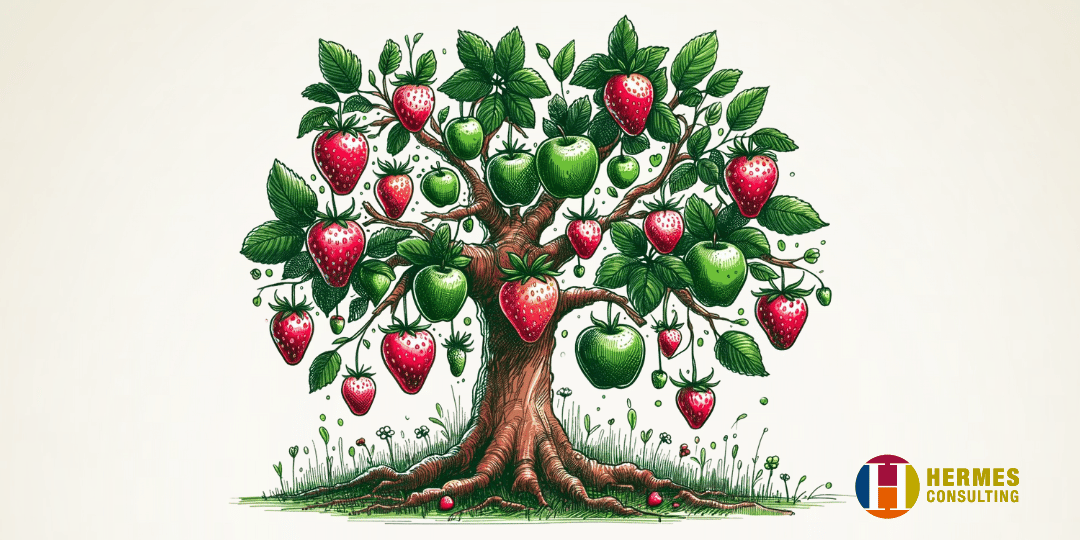
For example, a field or a tree was considered felix when it yielded the fruit it was destined to produce.
An apple tree is felix if it bears apples, not if it bears strawberries, no matter how good those strawberries might be.
This concept applies to human beings as well: each of us must fulfil our unique potential to find our happiness and our place in the world.
People are regaining this awareness; they are reflecting on their unique contribution to the human community. Younger generations, in particular, are rediscovering the fundamentally relational nature of human beings. Technological tools risk stripping away this quality, and young people are acting as a wake-up call, calling for the recovery of meaningful ways of being together.
This desire for ethics is clear among the young, especially regarding the environment.
The challenge is to translate this demand for ethics into concrete, pragmatic choices.
Giulia: Do you think the rising generations are setting in motion a safeguarding of both the ecosystem and themselves, preventing things from going adrift?
Vincenzo: Absolutely, yes. Taking care of oneself is a fundamental ethical act.
When I feel better, the people who interact with me feel better too.
This concept is also entering the business world, where young people are no longer willing to compromise their core values for work. Organisations should support this focus and help older generations embrace it too, preventing people from burning out or feeling dissatisfied. It is essential to create a work environment that cultivates culture and fosters connection and open dialogue between people.