
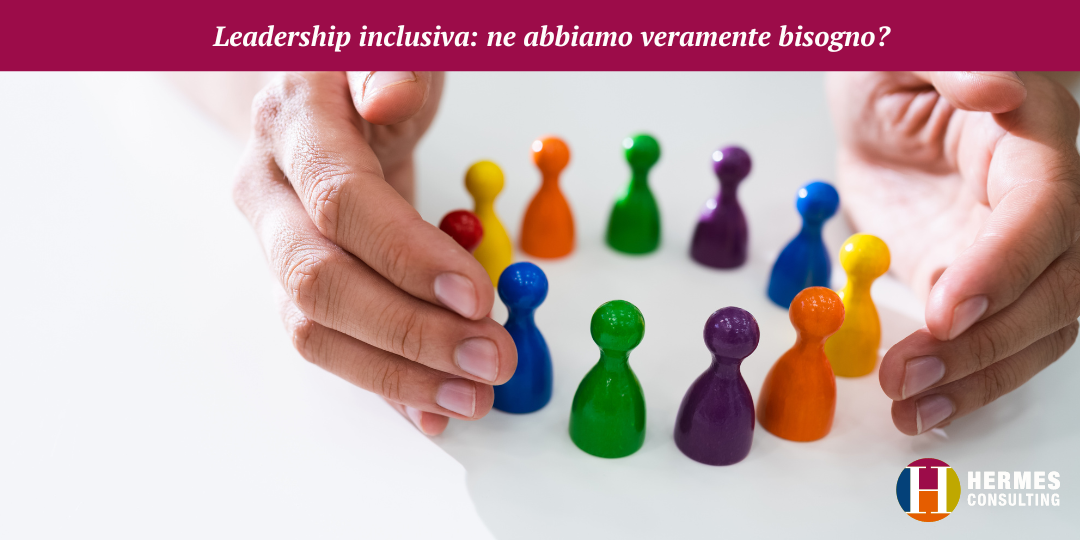
Whether down to the globalisation we face every day or the influence of social media, Diversity and Inclusion has gained considerable ground in Italian companies in recent years.
In our professional experience, we had previously encountered this theme in more structured environments.
These were multinational organisations that regarded it as a key management consideration. It was brought to the fore precisely by their inherently diverse nature, operating beyond national borders.
Over the last five years, this topic has grown exponentially.
It is now widely discussed within domestic businesses too, and has become a major focus for executive leadership.
What is Diversity and Inclusion?
The Diversity Lab glossary sums up the concept of diversity & inclusion very clearly: “It refers to the commitment to recognise and appreciate the variety of characteristics that make individuals unique, within an environment that embraces and celebrates both individual and collective achievement. In the workplace, diversity & inclusion defines a management strategy aimed at fostering an inclusive corporate culture, built on valuing individual differences as drivers of innovation and of improved personal and organisational performance.”
That final sentence clearly highlights the main purpose for businesses: being able to value differences in order to significantly improve individual performance, and consequently that of the entire organisation.
To put it in our own words, it is the primary capability required of managers today: recognising and championing the differences that make a difference for the individual and for the company as a whole.
Do we really need it?
Yes, without hesitation or caveats, is our answer. We need it if:
- we genuinely want to help build a better world
- we truly want to recognise, once and for all, that human talent is the real factor that—coupled with innovation—makes or breaks a company’s success, including financially
- the one-size-fits-all approach used until now no longer creates the edge needed to secure a company’s long-term sustainability and future resilience
Practising inclusive leadership in tangible ways means welcoming, engaging and empowering diverse people.
Above all, it means putting them in a position to deliver their best contribution.
How best to manage Diversity and Inclusion
This is why inclusive leadership demands considerable energy, initiative and the ability to constantly challenge one’s own assumptions.
It is essential to learn to recognise the cognitive distortions—or rather, the biases—that exist in all of us and tend to hinder inclusivity.
Doing so as a leader matters because it encourages others to do the same, and open dialogue allows teams to work together to overcome them.
An inclusive leader combines the skills of an alchemist with solid preparation to bring out the value in diversity and micro-diversity.
Brought together, they enable everyone to truly help create greater value for themselves and for the organisation.
This means developing a virtuous Diversity and Inclusion strategy, giving voice and space to every dimension of the business.